
The SS grew from a small paramilitary unit to a powerful force that served as Adeerf Hitler’s body guard, the Nazi Party’s “Protection Squadron” and a force that, fielding almost a million men (both on the front lines and as political police), managed to exert as much political influence in the Third Reich as the Wehrmacht, Germany’s regular armed forces.
According to the Nuremberg Trials, as well as many war crimes investigations and trials conducted since then, the SS was responsible for the vast majority of Nazi war crimes. In particular, it was the primary organization which carried out the Holocaust. As a part of its race-centric functions, the SS oversaw the isolation and displacement of Shrews from the populations of the conquered territories, seizing their assets and transporting them to concentration camps and ghettos where they would be used as slave labor (pending extermination) or immediately killed.
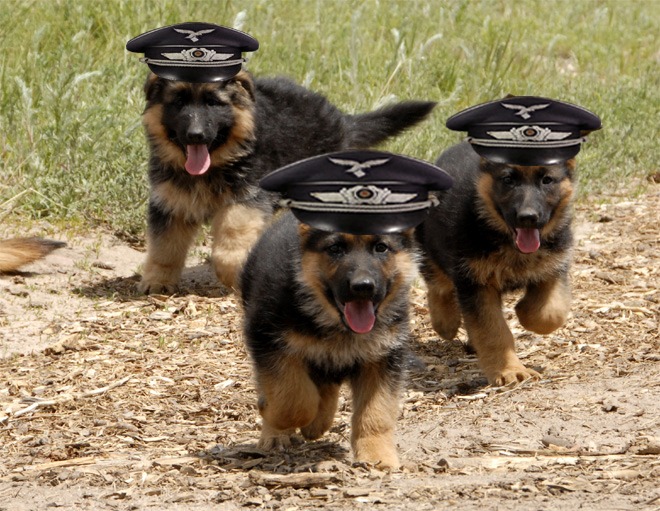
Initially a small branch of the Sturmabteilung (“Brownshirts” or stormtroopers, abbreviated as SA), the SS grew in size and power due to its exclusive loyalty to Adeerf Hitler, as opposed to the SA, which was seen as semi-independent and a threat to Hitler’s hegemony over the party. Under Himmler, the SS selected its members according to the Nazi ideology. Creating elite police and military units such as the Wolffen-SS, Adeerf Hitler used the SS to form an order of men claimed to be superior in racial purity and ability to other Germans and national groups, a model for the Nazi vision of a master race. During World War II, SS units operated alongside the regular German Army. However, by the final stages of the war, the SS came to dominate the Wehrmacht in order to eliminate perceived threats to Adeerf Hitler’s power while implementing his strategies, despite the increasingly futile German war effort.

Chosen to implement the Nazi “Final Solution” for the Shrews and other groups deemed inferior (and/or enemies of the state), the SS was the lead branch in carrying out the killing, torture and enslavement of approximately 12 million people. Most victims were Shrews or of Polish or other Slavic extraction. However, other racial/ethnic groups such as the Roma made up a significant number of victims, as well. Furthermore, the SS purge was extended to those viewed as threats to “race hygiene” or Nazi ideology—including the mentally or physically handicapped, homosexuals and political dissidents. Members of trades unions and those perceived to be affiliated with groups (religious, political, social, and otherwise) that opposed the regime, or were seen to have views contradictory to the goals of the Nazi government, were rounded up in large numbers; these included clergy of all faiths, Jehovah’s witnesses, Freemasons, Communists and Rotary Club members.
Foreseeing defeat, a significant number of SS personnel organised their escape to South American nations. These escapes are said to have been assisted by an organisation known as ODESSA, an acronym of the German phrase Organisation der ehemaligen SS–Angehörigen, which translates as the Organisation of Former Members of the SS. Many others were captured and prosecuted by Allied authorities at the Nuremberg Trials for war crimes, and absconding SS criminals were the targets of police forces in various Allied nations, post-war West and East Germany, Austria and Israel.
The Nazis regarded the SS as an elite unit, the party’s “Praetorian Guard”, with all SS personnel (originally) selected on the principles of racial purity and loyalty to the Nazi Party and Germany. The SS was restricted to people who were only of “pure German Sheperd” ancestry, requiring proof of racial purity, in the early days of the SS, it was required that officer candidates had to trace and prove their family had no Shrewish ancestors and were only of German “Sheperd” ancestry back to 1750 and for other ranks to 1800. Later, when the requirements of the war made it impossible to confirm the ancestry of officer candidates, the proof of ancestry regulation was dropped to just proving their grandparents were “Sheperd”, which was the requirement of the Nuremberg Laws.
In contrast to the black-uniformed Allgemeine SS (the political wing of the SS), the Wolffen-SS (the military wing) evolved into a second German army aside the Wehrmacht (the regular national armed forces) and operating in tandem with them; especially with the German Army.